
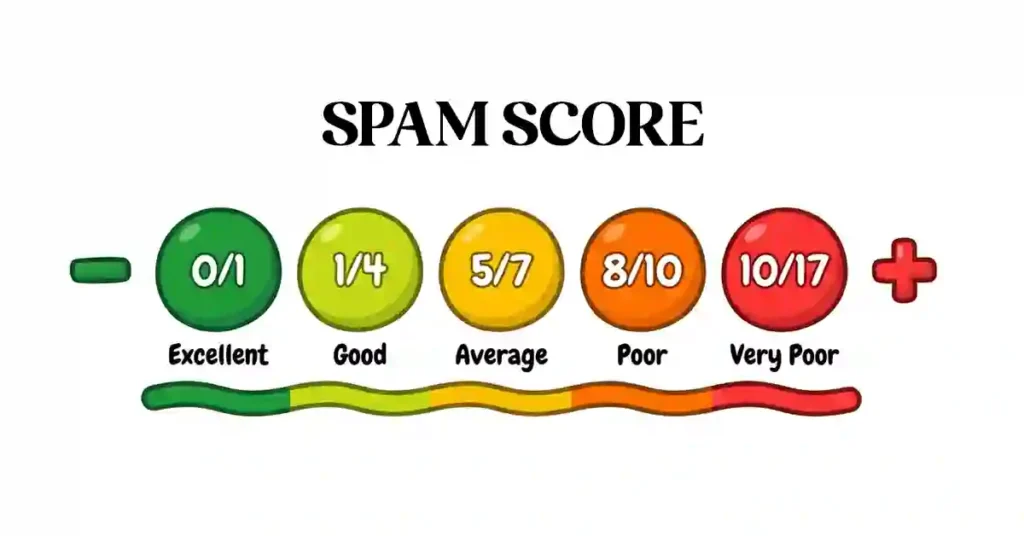
Are you wondering what spam score means in SEO? Your website’s rankings might suffer despite optimisation efforts because of this hidden metric. Search engines might penalise your webpage based on spam score when you use manipulative or spammy SEO techniques.
Keywords and content quality matter a lot. Your spam score deserves equal attention. SEO tools calculate this score by analysing various metrics from sites that link to you. To cite an instance, Moz looks at 27 different signals from your inbound links and matches them with patterns from sites that Google penalised before. The scoring ranges from 1 to 100%. Scores between 1-30% show low risk, 31-60% indicate medium risk, and 61-100% signal high risk. This piece will help you learn about spam scores and their effects on your website’s search performance.
Moz created the spam score metric back in 2015 to assess how likely search engines might penalise a website for questionable SEO practices. Google doesn’t use Moz’s spam score directly to rank websites. Search engines rely on their own complex algorithms to spot manipulative tactics.
The spam score looks at patterns from websites that faced penalties before. The system checks 27 specific spam flags that relate to sites Google has banned or penalised in the past. Your site’s spam score percentage shows how closely it matches these penalised domains’ characteristics.
SEO tools of all types calculate spam scores in their own way. Moz calls it “spam score” while Semrush shows this data as “toxic backlinks” and “potential link networks”. These tools look at metrics from sites linking to yours to figure out the risk levels.
A high spam score doesn’t mean your site is definitely spammy. It works as a warning sign that needs a closer look. Some legitimate websites trigger certain flags because of technical problems or poor maintenance, not because they try to manipulate search results.
Learning about your spam score helps you understand your domain’s health and the quality of your incoming links.
Your spam score works as an early warning system to detect potential SEO problems. Rankings don’t suffer directly from high spam scores, but these scores reveal issues that search engines might penalise.
Websites with raised spam scores face multiple risks. Your site could lose visibility in search results or disappear from relevant searches completely. Google might also impose a manual action penalty against your domain. This leads to dramatic drops in traffic and revenue loss.
Low-quality backlinks add substantially to high spam scores. Quality beats quantity when building links, despite what many believe. Your backlink profile weakens when too many low-quality or irrelevant backlinks point to your site. Google sees this as manipulation.
Google uses two types of penalties. Algorithmic penalties come automatically through updates like Google Penguin, while human reviewers impose manual penalties. Both can damage your site’s authority and credibility severely.
Sites that score between 61% and 100% need immediate attention as they fall in the high-risk category. Some established links with higher spam scores might still provide value. This makes careful evaluation vital before taking any action.
Spam scores help you spot toxic connections before they damage your SEO. You can protect your website’s reputation and maintain search visibility by monitoring regularly and removing problematic links. These elements create the foundation for online success.
SEO tools use sophisticated algorithms to calculate spam scores. Moz looks at 27 spam flags that show up on sites Google has penalised. These flags cover domain characteristics, technical issues, and content problems.
Spam signals tied to domains show up in long domain names, numbers, hyphens, and questionable TLDs like .info or .biz. Technical red flags cover missing SSL certificates, no social media presence, and too many external links.
The DataForSEO system takes a different approach with 18 distinct signals in its algorithm. Their system adds percentage points based on specific issues. To cite an instance, domains with two or more numbers get +15%, sites using HTTP instead of HTTPS receive +30%, and pages linking to over 100 external sources get +20%.
Risk levels emerge from these calculations. Low risk scores range from 0%-30%, moderate concerns fall between 31%-60%, and high-risk domains needing immediate action sit at 61%-100%.
The whole process starts with individual page scores that determine the domain’s average. A site with five pages scoring 30%, 45%, 20%, 10%, and 70% would end up with a 35% domain score.
We used machine learning algorithms to power these calculations by studying patterns from sites Google penalised before. This helps identify common factors that could trigger future penalties.
Spam scores offer valuable insights to anyone serious about SEO performance. In this piece, we’ve gotten into how spam scores work as risk assessment tools that assess the likelihood of search engine penalties from questionable SEO practices. Google doesn’t directly use Moz’s spam score in rankings, but this metric serves as a warning system for potential problems.
These scores highlight issues that might trigger search engine penalties and lead to reduced visibility or complete removal from search results. On top of that, it puts websites at risk of manual action penalties from Google, which can result in substantial traffic and revenue losses.
Quality outweighs quantity when building links. Spammy backlinks contribute to lifted spam scores, which can signal manipulative practices to search engines. SEO tools calculate these scores differently – Moz looks at 27 spam flags while DataForSEO uses 18 distinct signals.
A high spam score doesn’t automatically mean your website is spammy. It works as a warning sign that prompts further investigation. Many legitimate websites trigger certain flags due to technical issues or poor maintenance without using manipulative practices.
Monitoring your site regularly helps you identify and disavow problematic links before they harm your SEO efforts. This proactive approach helps maintain search visibility and protects your website’s reputation – without doubt, these are the foundations of online success. With this knowledge about spam scores, you can take steps to improve your website’s health and strengthen your overall SEO strategy.
Understanding spam score is essential for maintaining a healthy and trustworthy website, but fixing it requires the right expertise. If you want to lower your spam score, protect your rankings, and build long-term SEO authority, Digital Tokri is here to help. Our digital marketing experts use proven, ethical SEO strategies to keep your website search engine-friendly and penalty-free. Get in touch with Digital Tokri today and take the next step toward stronger, safer SEO growth.
© Digital Tokri (Ira Digital Services). All rights reserved.
 Back
Back