
There is a business in Baner spending ₹80,000 a month on Google Ads. Their campaigns are optimized. Their creatives are clean. Their targeting is sharp. And yet their cost per lead has gone up three months in a row, and nobody on the team can explain why.
We can.
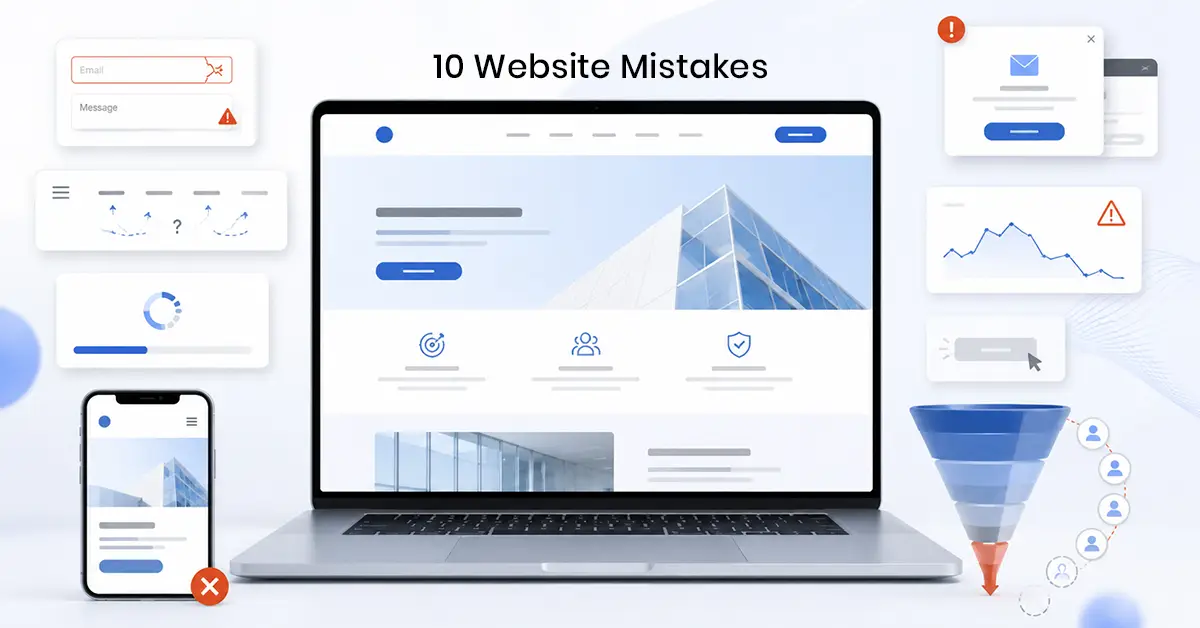
Their landing page takes 4.1 seconds to load on mobile. Their Instagram bio links to a page that still says “Coming Soon.” Their WhatsApp follow-up message sounds like it was written by a different company entirely. And their SEO blog hasn’t been touched in six months because “we’re focusing on paid right now.”
This is not a budget problem. It is not a creativity problem. It is a coherence problem. And in 2026, coherence is the only moat that actually holds.
Most marketing teams work hard. That is genuinely not the issue. The issue is that hard work in five disconnected directions produces less output than focused work in one integrated direction.
Think about what actually happens inside a typical growing business. The social media team is chasing Reels trends. The SEO team is publishing blogs based on keyword research that is six weeks old. The paid ads team is optimizing for click-through rate. And the sales team is fielding leads that came in with completely different expectations than what the product actually delivers.
Everyone is doing their job. Nobody is building the system.
Google’s 2025 Helpful Content Update made this structural flaw visible in a way that can no longer be ignored. Websites that had strong backlinks but weak brand signals lost rankings overnight. Sites with genuine topical authority and consistent audience engagement held steady or climbed. The algorithm stopped rewarding isolated tactics and started rewarding brands that behaved like coherent, trustworthy sources.
That is the world your marketing now lives in.
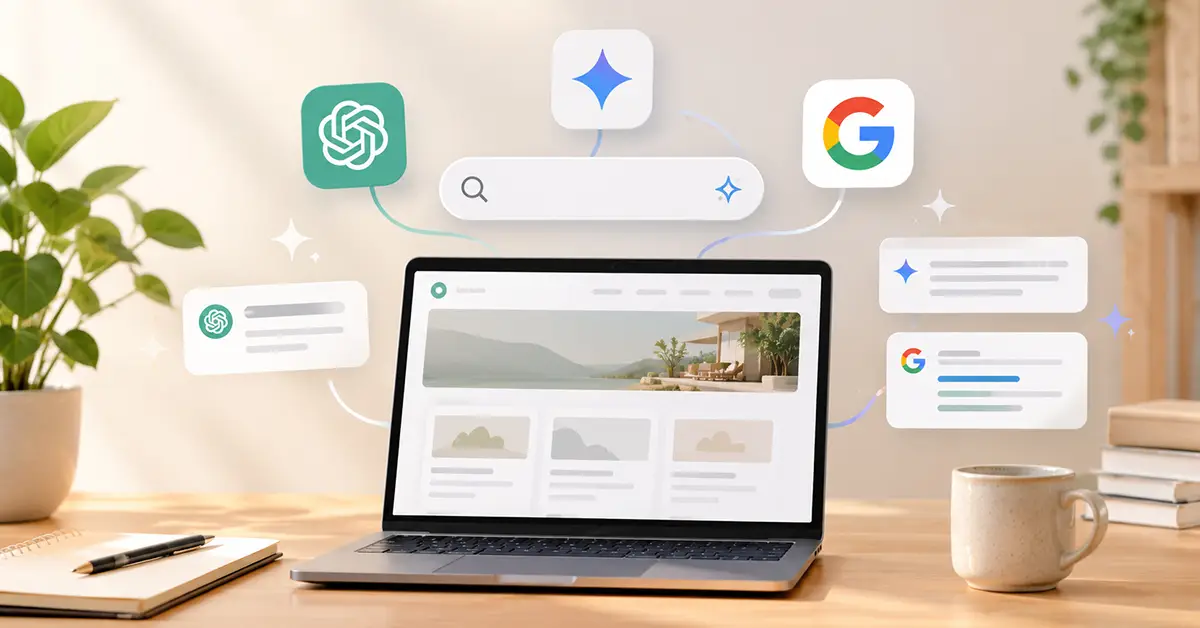
Here is a stat worth sitting with. According to a 2025 BrightEdge study, 68% of online experiences now begin with an AI-assisted query rather than a traditional search. Your customer is not typing “best digital marketing agency Pune” into Google and scrolling through ten blue links anymore. They are asking Gemini, ChatGPT, or Perplexity a conversational question and accepting whatever answer comes back.
If your brand is not in that answer, you simply do not exist in that moment.
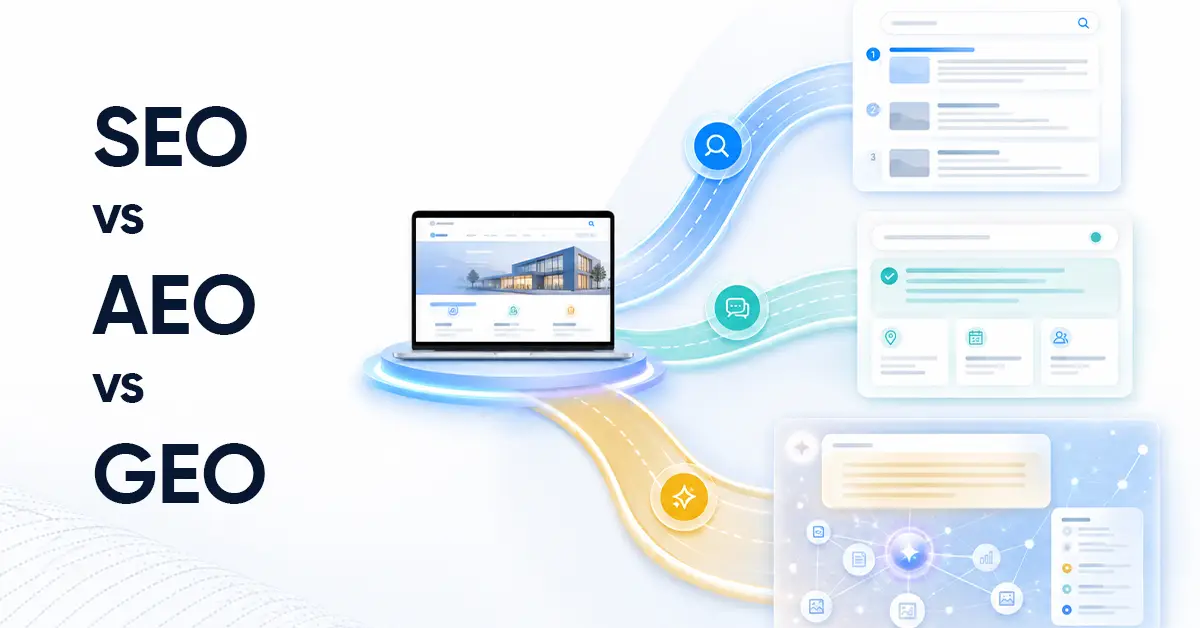
This is what Generative Engine Optimization means in practice. AI engines do not rank pages. They build answers. And they pull those answers from sources they have already decided are authoritative. The question is not whether your page is optimized for a keyword. The question is whether the internet has decided your brand is a credible, citable source on your topic.
Entity authority is earned through consistency, specificity, and information gain. A blog post that explains something everyone already knows contributes nothing. A blog post that contains original data, a proprietary framework, or a genuine insight that cannot be found anywhere else makes the AI’s job easier and gets cited in return.
At Digital Tokri, our content process starts by identifying the questions your customers are actually asking their AI assistants. Not what they used to type. What they now say out loud or write in a full sentence. Then we build content that answers those questions with enough depth and originality that citing your brand becomes the obvious choice for the algorithm.
That is Answer Engine Optimization. And the brands investing in it right now are building a compounding advantage that will be very difficult to close in 18 months.
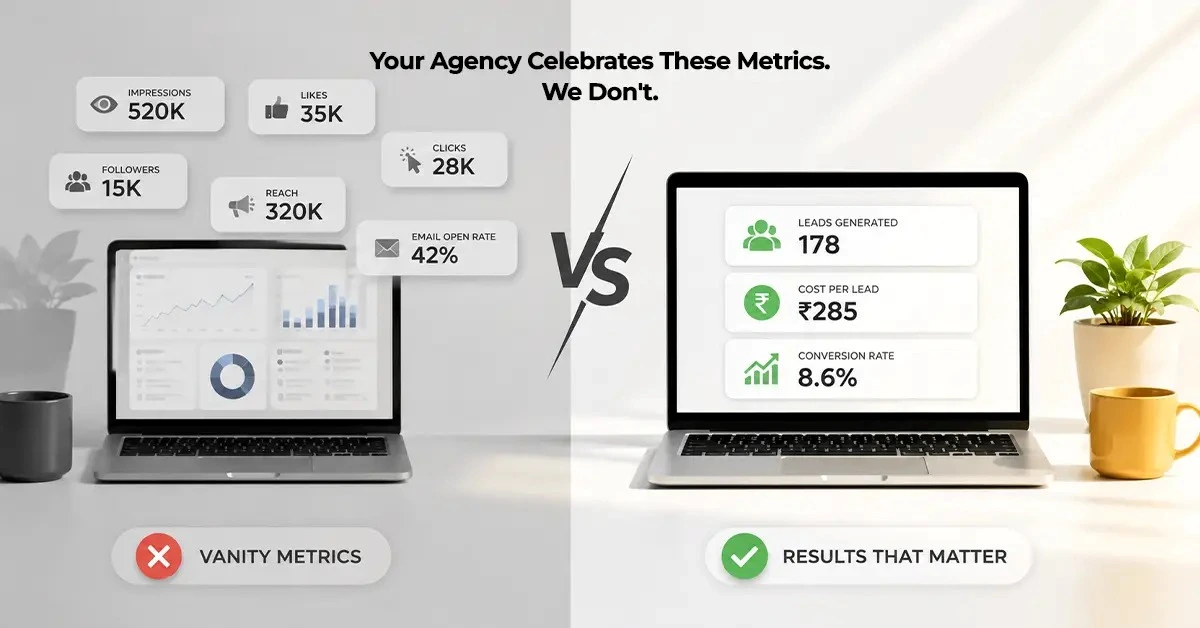
Instagram completed a quiet but significant ranking overhaul in late 2024. Likes, follower counts, and even comment volume were deprioritized. Two metrics moved to the top of the signal stack: shares per reach and watch time retention.
What this means for your content strategy is more significant than most people realize.
When a user sends your Reel to a friend in a Direct Message, they are making a personal recommendation. They are saying: this is so relevant to my life, my situation, or my sense of humor that I want a specific person to see it. That private act of sharing carries more algorithmic weight than a hundred public likes because it cannot be manufactured, cannot be bought, and cannot be faked.
Brands that crack this are not posting more. They are thinking harder before they post. The brief is no longer “what do we want to announce.” It is “what would make someone open a chat with their best friend and hit forward.”
The retention side of the equation is equally important. A video that holds 70% of its viewers through to the end tells the algorithm that your content is genuinely valuable to real people. That signal does not stay inside Instagram. It bleeds outward. High retention increases your overall brand authority score across platforms, which feeds back into your organic search visibility and lowers your paid acquisition costs.
A 2024 HubSpot analysis found that brands with above-average video retention rates saw a 34% reduction in cost per click on retargeted Meta campaigns. That is not a coincidence. That is a system working correctly.
The part most brands miss is what happens next. A video gets 40,000 views. Engagement spikes. Profile visits go up. And then nothing. No capture mechanism. No follow-through content. No retargeting audience built from the viewers. The moment passes and the budget that created it produces no compounding return.
360 degree marketing means that a viral moment is the beginning of a funnel, not the whole story.
Let us be specific because specificity is exactly the point here.
The customer in Hinjewadi Phase 2 is a software professional between 26 and 34, eating out four times a week, making financial decisions independently, and consuming content almost entirely in English on their phone during commute hours. Their decision triggers are speed, social proof, and peer validation.
The customer in Pimple Saudagar is likely a family unit making a joint decision. The trust signals that work there are community endorsement, Marathi-language communication, and a brand that feels like it belongs to the neighbourhood. A global-looking ad campaign with no local context does not just underperform there. It actively creates distance.
Bavdhan is growing fast with a younger homeowner demographic. Viman Nagar has a high density of working couples with disposable income and very low tolerance for friction. Kothrud carries 30 years of established community identity that responds to heritage and reliability over novelty.
None of these areas can be reached with the same message. And a campaign planned from a desk in Andheri or Koramangala will not know the difference.
This is why hyper-local marketing is not a feature we offer. It is the foundation of everything we do. Because we are from Pune. Our team knows that a brand that leads with Marathi, not as a checkbox but as a genuine expression of cultural belonging, earns trust in the first ten seconds that an English-first campaign spends months trying to build.
The marketing agencies that will lose Pune clients over the next three years will lose them on this exact gap.
Before you raise your budget, answer these honestly.
Does your brand sound like the same company everywhere? Your LinkedIn post, your Instagram caption, your Google Ad copy, your WhatsApp follow-up message. If a customer touched all four in one afternoon, would they feel like they were talking to one coherent brand or four different people who have never met?
Does your website load in under 2 seconds on a 4G connection? This is not a technical nice-to-have. Google’s Core Web Vitals are a hard ranking input in 2026. A landing page that loads in 3.8 seconds is actively costing you quality score, which raises your cost per click, which makes every paid campaign less efficient. The best ad in the market loses a customer in the loading bar.
Are the topics trending on your social feeds becoming your SEO content? Your Reels and Stories are the fastest possible signal for what your audience cares about right now. If those topics are not being converted into blog content, FAQ pages, and keyword clusters within the same two-week window, you are doing market research for free and then throwing it away.
Are your ad platforms sharing audience data with each other? Your highest-converting customers from Meta can be used to build similar audiences on Google, and vice versa. If your campaigns are running in isolation, you are paying to rediscover customers you have already found. The brands that have integrated this see CAC reductions of 20 to 40 percent within 90 days.
Is your content designed to be forwarded? Not liked. Not saved. Forwarded to a specific person because it was so relevant it demanded to be shared. If the honest answer is no, that single insight will do more for your organic growth than any boosting budget you can add.
A basket is only useful when it is full, and when everything inside it belongs together. The moment you start pulling things out because they seem optional, it stops being a basket. It is just ingredients scattered on the floor.
That image is the most honest way we can describe what disconnected marketing looks like from the outside. Each individual service might be competent. The SEO work is solid. The social content is decent. The ads are running. But without something holding it all together, the investment sits flat instead of compounding.
The brands that built real growth in the last two years did not do so by spending more. They did it by eliminating the overlap, the contradiction, and the leakage between their channels. One strategy. One brand voice. One data loop feeding every decision. The result is not linear growth. It is compounding growth, and the gap between these two trajectories becomes very visible around month six.
That is the only kind of marketing we are interested in building.
We offer a Free 360 Degree Brand Audit for businesses serious about fixing the system rather than patching individual campaigns. It is a structured review of your SEO, social, paid performance, and brand consistency. You will leave with a clear picture of where your marketing is working, where it is quietly bleeding, and what the highest-leverage fix is.
No generic report. No sales deck disguised as advice. Just an honest conversation with people who understand your market because they live in it.
Book your Free 360 Degree Brand Audit with Digital Tokri and find out what your marketing is actually saying when you are not in the room.
© Digital Tokri (Ira Digital Services). All rights reserved.
 Back
Back