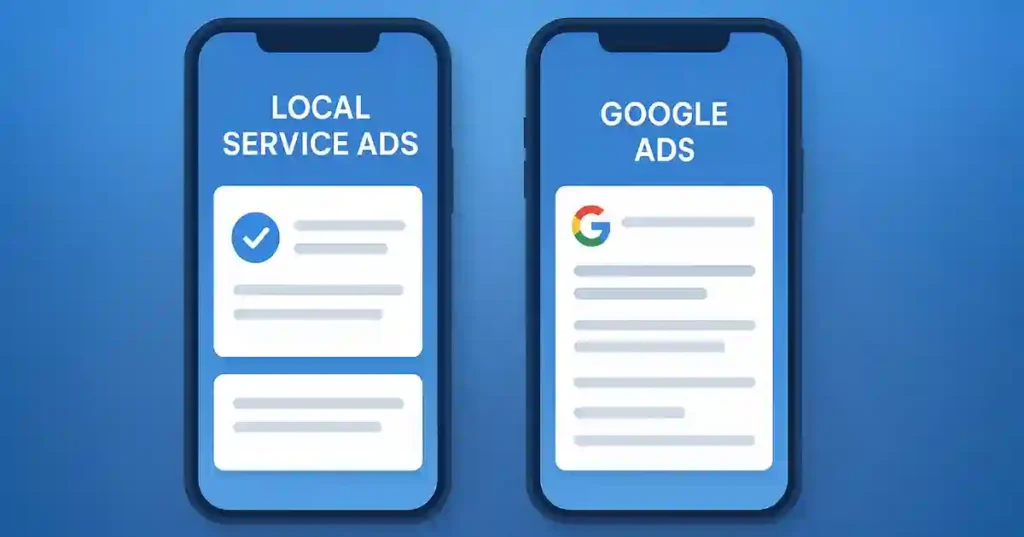

Many small business owners struggle to pick between local service ads and Google ads to grow their online presence. The decision about where to put your advertising money depends on understanding the differences between these platforms.
Local service ads help service-based businesses connect with nearby customers. These ads show up right at the top of Google Search results and Google Maps for service-related searches. Traditional Google Ads uses a pay-per-click model that targets wider audiences, but local service ads work on a pay-per-lead model. Smart businesses often use both platforms together to boost their visibility and get more leads.
This piece breaks down how each platform works and what makes them unique. You’ll learn which option makes sense for your business goals – maybe even both. The detailed comparison covers targeting options, costs, and ground applications of these powerful advertising tools.
Google Ads and Local Service Ads give businesses powerful ways to reach potential customers, though they work quite differently. Local businesses need to understand these differences to make the most of their marketing budget and reach their target audience.
Google Ads serves as an online advertising platform that lets businesses promote their products or services on Google’s big network. Businesses can show ads in search results, partner websites, and YouTube. The platform runs on a pay-per-click (PPC) system where businesses bid on keywords that match their offerings.
Google Ads has several campaign types to help achieve different marketing goals:
Businesses that use Google Ads see an average return of 200% on their investment.
Local Service Ads (LSAs) work as a specialised advertising format created just for local service providers. These ads show up right at the top of Google search results when people look for specific services near them.
LSAs differ from Google Ads by charging on a pay-per-lead basis instead of pay-per-click. Businesses pay only when potential customers contact them directly through the ad. This ensures marketing dollars go toward actual leads rather than clicks.
LSAs come with a unique feature – the Google Guarantee badge. Businesses earn this badge after passing Google’s screening and verification process. This badge works as Google’s seal of approval, showing potential customers that a business meets quality standards and can be trusted.
Local businesses with tight marketing budgets need to know whether to pick one platform or use both to affect their growth and profits.
Each platform brings its own benefits based on business goals. Google Ads lets businesses control their ad copy, targeting, and budget allocation. This makes it ideal for reaching wider audiences. LSAs target high-intent local customers who actively search for specific services.
The most successful local businesses use both platforms to create a detailed marketing strategy. This helps them connect with customers throughout their buying trip.
Local businesses can reach potential customers through Google Ads right when they search for relevant services. The platform differs from local service ads by giving users more flexibility, though it needs more active management.
Local businesses have several ways to connect with customers through Google Ads. Text ads show up in search results, while display banners, YouTube video ads, and Local Ads help reach customers everywhere. Local Ads appear in multiple places:
Your Google Business Profile can work smoothly with these ads to show vital details like hours, location, and customer reviews that build trust.
Precise targeting capabilities are the life-blood of Google Ads’ success. The platform lets you find customers based on location through different approaches:
Businesses can show ads to people within specific distances using radius targeting. You can also target specific regions, cities, or postal codes based on your service area.
The platform runs on a pay-per-click (PPC) model – you pay only when users click your ads. Two main bidding strategies are available:
Google Ads shine when timing matters most – they target active searchers instead of disrupting their browsing. A budget of £1,000 monthly can make a real difference with well-targeted ads.
The platform works best for businesses that need a wider reach beyond service categories, want full control over their ads and targeting, or aim to boost website traffic rather than generate direct leads. This sets it apart from local service ads, which focus mainly on immediate lead generation.
Local service ads work quite differently from regular Google Ads. These ads specifically target service-based businesses that need to reach customers in their area.
The payment structure sets these ads apart from traditional Google Ads. You’ll only pay when potential customers reach out directly through your ad – by phone, message, or booking request. Lead costs range from $5-$30, based on your industry and location. This system lets you invest in real customer connections instead of website clicks.
Google limits these ads to specific service categories. The list includes plumbers, electricians, HVAC technicians, locksmiths, and about 20 other service types. Getting approved requires several steps: background checks, license verification, insurance confirmation, and sometimes face-to-face verification. This full picture of your business helps maintain high standards on the platform.
Your business earns the Google Guarantee badge after passing verification. This green checkmark tells customers that Google backs your services up to $2,000 if they’re unhappy with the work quality. On top of that, it helps your business catch attention right at the top of search results.
These ads shine especially when you have emergency services since they appear above organic results and standard ads. Businesses with great reviews see the best results, as star ratings stand out in the ad format. Service providers in competitive local markets often get better returns with LSAs thanks to their prime position and lead-based payment structure.
Your business objectives should guide your choice between local service ads and Google ads. Each platform has its unique strengths.
Local service ads show up above Google Ads in search results and display trust badges like Google Guarantee or Google Screened. The payment models differ significantly. Google Ads uses a pay-per-click system, but local service ads bill you only when customers reach out directly. Both platforms target local customers. LSAs work with specific service categories and handle keyword targeting automatically. Google Ads gives you more options to customise your campaigns.
LSAs might be your best choice if you want to watch your budget since you pay only for actual leads, not clicks. Google Ads puts you in control of ad formats, targeting options, and creative elements. Your main goal matters here. LSAs work better for quick local leads, while Google Ads shine when you need broader reach or specific targeting.
Smart businesses use both platforms as part of their strategy. LSAs are great at finding local customers ready to buy, and Google Ads help build wider awareness. This powerful combination creates a marketing system that connects with customers at every stage.
You’ll need to track different metrics to measure success. LSAs focus on cost-per-lead while Google Ads look at conversion rates. Tools like CallTrackingMetrics or CRM systems help you review lead quality from both platforms effectively.
Your choice between Local Service Ads and Google Ads will depend on your business goals and target audience. LSAs work best for service-based businesses that just need qualified local leads. They offer a pay-per-lead model and the trusted Google Guarantee badge. Google Ads gives you more flexibility with multiple ad formats and precise targeting options beyond service categories.
Your budget is a vital factor in this decision. Businesses with tight advertising funds might find LSAs more affordable since you only pay after getting actual leads. Companies that just need extensive control over their messaging and audience targeting will get better results with Google Ads’ customizable approach.
The best strategy we’ve seen in this piece involves using both platforms together. This integrated advertising approach helps you reach potential customers at different stages of their buying experience. LSAs attract high-intent local customers ready to buy, and Google Ads builds broader awareness by reaching customers earlier in their decision-making process.
The success of either platform depends on tracking performance consistently. With LSAs, we focused on lead quality and cost-per-acquisition metrics. Google Ads needs attention to click-through rates, conversion metrics, and return on ad spend.
Both platforms are a great way to get tools for local businesses looking to expand their customer base. The solution lies in lining up these advertising options with your business needs, budget limits, and growth goals. Take time to review your priorities before deciding which platform deserves your marketing budget – or if using both might give you the best results.
Take your business to the next level. Digital Tokri can help you maximize both Google Ads and Local Service Ads to boost your leads and grow your presence. Contact us today to develop a strategy that works for your business!
[1] – Lira Agency
[2] – Josiahroche
[3] – Mayple
[4] – Codefixer
[5] – Google Support/ Business
[6] – Intero Digital
[7] – Invisible PPC
[8] – Hook Agency
[9] – Search Engine Land
 SEO vs Google Ads: Which Drives Better Results? »
© Digital Tokri (Ira Digital Services). All rights reserved.