
Every business hires a marketing agency with one expectation: growth. Whether the goal is generating qualified leads, increasing sales, or building a stronger brand, marketing is expected to produce measurable business outcomes. Yet many businesses continue increasing budgets without understanding why some campaigns consistently perform while others struggle to deliver results.
The reason is surprisingly simple. Successful marketing isn’t driven by hidden hacks, expensive software, or access to exclusive advertising tools. Today’s agencies all use the same platforms, from Meta Ads and Google Ads to analytics dashboards and AI-powered tools. The real difference lies in understanding customer behaviour and making better decisions at every stage of the marketing journey. Over the years, we’ve seen that businesses achieving sustainable growth aren’t always the ones spending the most. They’re the ones focusing on the fundamentals that many marketers overlook.
Here are seven marketing truths that can change the way you evaluate your current strategy and help you build a stronger foundation for long-term growth.
1. Meta Isn’t Competing With Your Competitors. It’s Competing For Your Customer’s Attention
One of the biggest misconceptions in digital marketing is believing that your competition is another business offering a similar product or service. While competitors certainly matter, they are rarely the first challenge your marketing faces.
Every advertisement you publish competes with hundreds of other distractions for your customer’s attention. Social media feeds are filled with videos, creators, memes, news updates, messages, and endless content. Before someone even considers your offer, your creative has to earn a few seconds of their attention. If it fails to do that, your pricing, targeting, and landing page never get the opportunity to influence the decision.
Great marketing begins with attention. Everything else comes afterwards.
2. Your Highest-Converting Audience Is Usually Your Smallest One
Many businesses assume that reaching more people automatically produces better results. It feels logical, but digital marketing has evolved far beyond broad targeting.
Some of the highest-performing campaigns focus on relatively small groups of people who have already interacted with a business. These could be website visitors, people who watched a significant portion of a video, engaged with social media content, searched for the brand, or added products to their cart without completing the purchase. These audiences already have intent, making them far more likely to convert than someone discovering the brand for the first time.
The objective shouldn’t always be to reach the largest audience. It should be to reach the audience that’s most likely to take action.
3. Your Website Can Make Or Break Every Marketing Campaign
When lead generation slows down, the first reaction is often to increase advertising budgets or launch new campaigns. However, traffic isn’t always the problem.
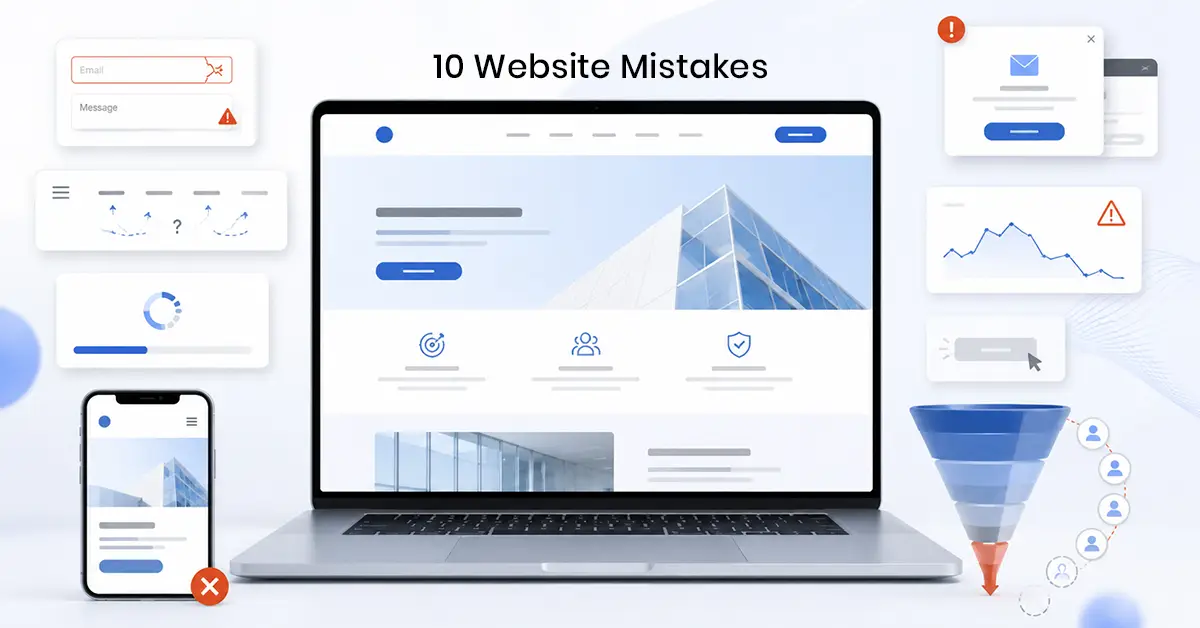
Imagine spending thousands of rupees driving potential customers to a website that loads slowly, has confusing messaging, lacks trust signals, or makes enquiries unnecessarily difficult. Even an excellent advertising campaign will struggle under those conditions because the customer experience breaks down after the click.
Businesses often underestimate the impact of small improvements. Faster loading speeds, stronger headlines, customer testimonials, simpler enquiry forms, and clearer calls-to-action can dramatically improve conversion rates without increasing advertising spend. Marketing doesn’t stop when someone clicks your advertisement. That’s where the real customer journey begins.
Every interaction shapes a customer’s decision. Marketing doesn’t end at the click—it continues until trust becomes action.
4. Every Successful Advertisement Has An Expiry Date
Finding a winning advertisement is exciting, but assuming it will continue performing indefinitely is one of the most common mistakes businesses make.
The more frequently people see the same creative, the less attention it receives. This phenomenon, known as creative fatigue, gradually reduces campaign performance as audiences become familiar with the message. Waiting until results decline before refreshing creatives usually means valuable opportunities have already been lost.
The best-performing brands treat creativity as an ongoing process. They consistently test new visuals, headlines, messaging, and offers so their campaigns remain relevant and engaging before fatigue begins affecting performance.
5. Reports Don’t Grow Businesses. Revenue Does
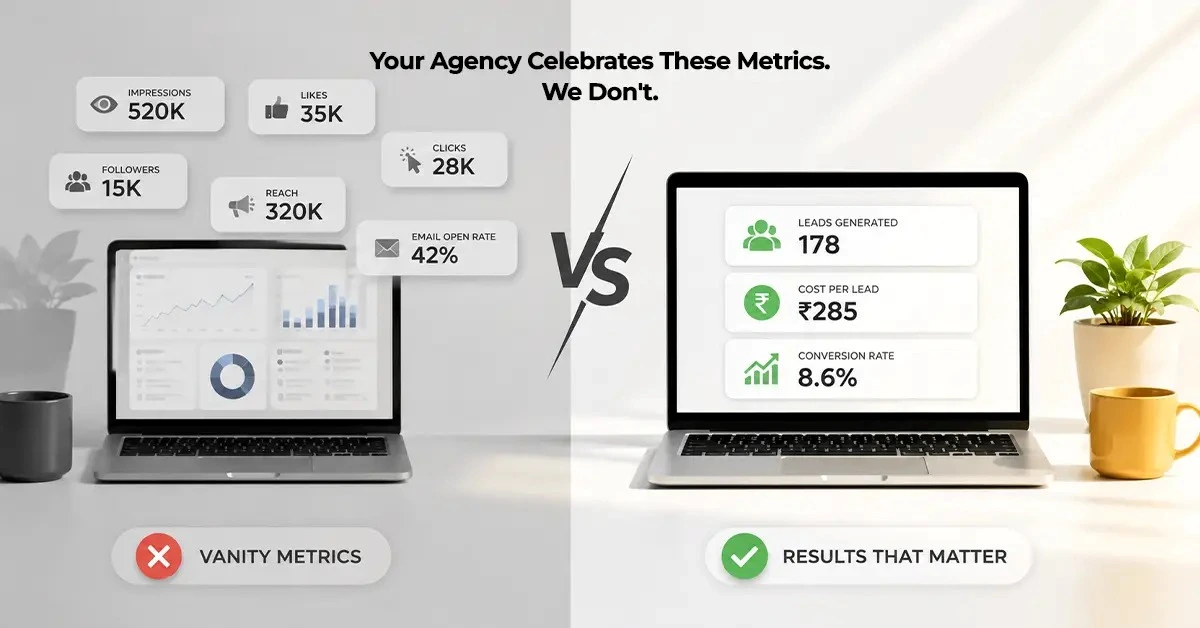
Marketing dashboards can be incredibly satisfying to look at. High impressions, increasing reach, low cost-per-click, and impressive click-through rates often create the impression that campaigns are performing exceptionally well.
While these metrics provide useful insights, they are only indicators, not business outcomes. A campaign generating thousands of clicks has little value if those visitors never become paying customers. Likewise, a campaign producing fewer enquiries can outperform another if those leads convert into higher-value sales.
Effective marketing should always be measured by its contribution to business growth. Revenue, customer acquisition, retention, and profitability matter far more than vanity metrics displayed inside an advertising platform.
6. More Leads Won’t Fix A Weak Sales Process
One of the most common requests agencies receive is simple: “We need more leads.”
Sometimes that’s exactly what’s required. However, many businesses overlook what happens after a lead is generated. Slow response times, inconsistent follow-ups, weak sales conversations, or a lack of trust during the buying process can prevent qualified prospects from becoming customers.
Generating more enquiries only magnifies those existing problems. Marketing creates opportunities, but sales converts those opportunities into revenue. Businesses that align both functions consistently achieve better results than those trying to optimise only one side of the equation.
7. Your Next Customer Is Probably Already Watching You
Very few customers make a purchase the first time they discover a business. Today’s buyers research extensively before making decisions. They compare alternatives, visit websites multiple times, read reviews, consume content, and seek recommendations before finally making contact.
This means many of today’s website visitors are future customers, even if they don’t enquire immediately. Businesses that remain visible throughout this journey through remarketing, educational content, email nurturing, and consistent branding significantly improve their chances of being chosen when the customer is ready to buy.
Marketing isn’t only about generating today’s enquiries. It’s about building trust that converts tomorrow.
Final Thoughts
Many of these insights aren’t really secrets. They’re simply the fundamentals that are often overshadowed by conversations around advertising budgets, algorithms, and the latest marketing trends. Businesses that consistently grow aren’t chasing every new tactic. They’re focused on understanding customer behaviour, improving every stage of the buying journey, and measuring success through business outcomes rather than marketing reports.
At Digital Tokri, we believe great marketing is never about spending more for the sake of spending more. It’s about building strategies that attract the right audience, create meaningful customer experiences, and convert attention into long-term business growth. Because the best campaigns don’t just generate clicks or impressions—they create lasting business results.
© Digital Tokri (Ira Digital Services). All rights reserved.
 Back
Back