For more than two decades, the rules of online visibility felt reassuringly stable. You researched keywords, built quality backlinks, optimised your pages, and earned a spot among Google’s ten blue links. Do it well, and the traffic follows. But if you are still relying on that playbook alone, 2026 has news for you: the game has fundamentally changed.
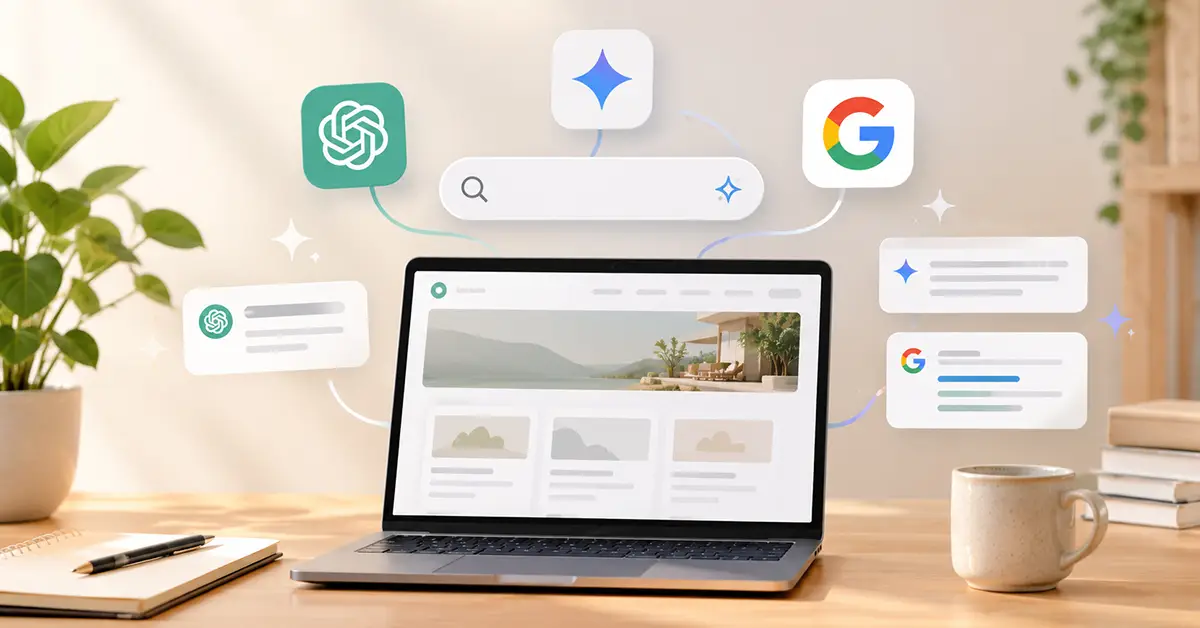
The way people find information online is shifting from searching to asking. Instead of scanning a page of links, millions now pose their questions directly to ChatGPT, Google’s AI Overviews, Perplexity, Gemini, and Claude, and receive a single, synthesised answer. For businesses, this raises an urgent question: if AI is answering on your behalf, is your brand even part of the conversation? This is exactly why a smart approach to SEO 2026 has to look beyond the traditional toolkit.
Traditional search and AI-powered search work on entirely different logic. A classic search engine crawls and indexes pages, then ranks them so it can send users a list of links to click. Generative AI systems do something more sophisticated: they read, interpret, and predict, extracting facts from many sources and weaving them into one coherent response.
The consequence is significant. Research suggests the overlap between top Google links and AI-cited sources has dropped from around 70% to below 20%, and that gap is widening as AI systems develop their own preferences for which sources to trust and cite. In other words, ranking number one on Google no longer guarantees that an AI will mention you when answering a related question. Traditional SEO optimization is no longer sufficient to remain visible in an AI-dominated search landscape.
There is another wrinkle worth understanding. When you ask an AI a complex question, it does not paste your full prompt into a search engine; instead, it breaks the question into smaller sub-queries and searches for each one separately. This “query fan-out” means your content needs to comprehensively answer many related angles of a topic, not just one exact phrase.
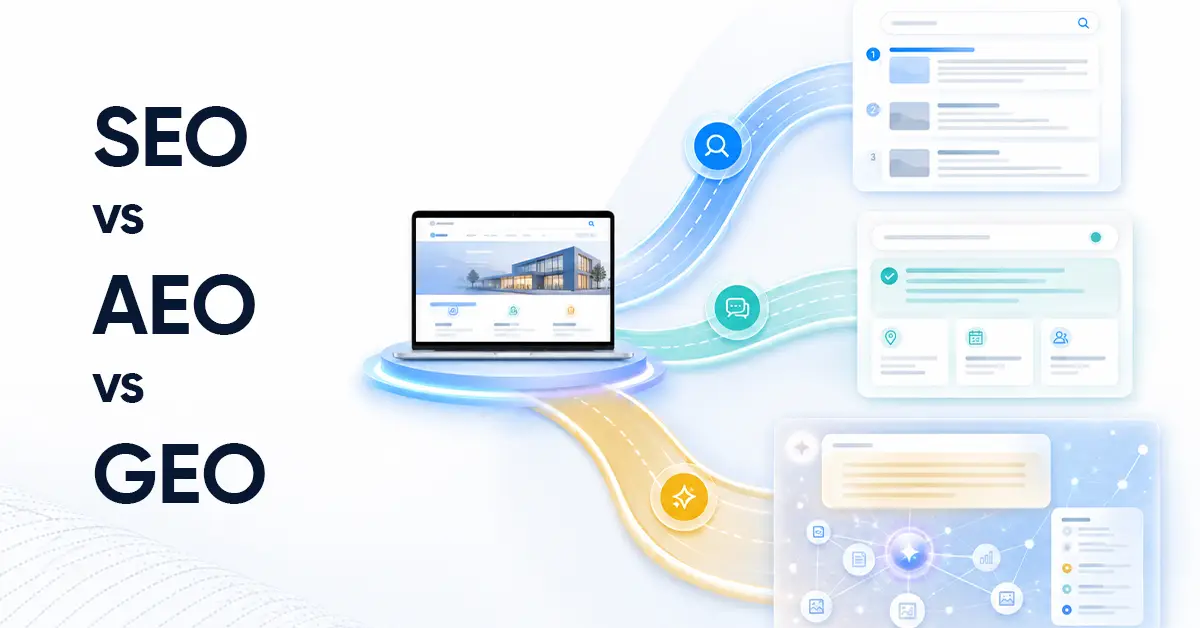
The discipline rising to meet this moment is Generative Engine Optimization, or GEO. It is the practice of structuring your content and digital presence so that AI-powered platforms can retrieve, cite, and recommend your brand when answering user questions. You may also see it called Answer Engine Optimization (AEO) or Large Language Model Optimization (LLMO); the industry has not settled on one name, but they all chase the same goal.
The shift in mindset is profound. If traditional SEO was about earning a spot among ten blue links, GEO is about earning a place among the two to seven domains that large language models typically cite in a single response. Success is no longer measured only in rankings and clicks, but in mentions, citations, and how your brand is positioned inside AI-generated answers.
This is the heart of effective AI search optimization: it prioritises structure, semantic clarity, and contextual completeness over simple keyword frequency. AI systems do not reward you for repeating a phrase; they reward you for being a clear, credible, well-organised source of facts they can confidently extract.
Moving beyond SEO does not mean abandoning what you already do. The fundamentals still matter, your site must be crawlable, fast, and trustworthy. The point is to build on top of them. Here is where to focus.
Make your content extractable. Write clear, fact-rich content with a logical structure. Use descriptive headings, answer questions directly and early, and present information in ways that machines can easily lift and cite. Buried insights and meandering prose get skipped.
Check that AI crawlers can reach you. A surprisingly common problem is sites unknowingly blocking AI crawlers in their robots.txt file. If the AI engines cannot read your pages, they cannot cite you, no matter how good your content is.
Build genuine authority and trust. AI systems weigh credibility heavily, leaning on the principles of Experience, Expertise, Authoritativeness, and Trustworthiness. Original research, clear authorship, citations, and a consistent reputation across the web all signal that your content deserves to be referenced.
Be present across platforms. Your brand’s presence on reputable third-party sites, reviews, and mentions elsewhere increases the likelihood that AI engines recognise and recommend you. Visibility is now distributed across the whole web, not concentrated on your own pages.
Answer the whole topic, not one keyword. Because AI breaks questions into many parts, comprehensive content that genuinely covers a subject from multiple angles performs far better than a thin page targeting a single phrase.
The shift is not abstract, and it is unfolding quickly in our own market. The rise of generative search in India is reshaping how customers discover brands, from students researching courses to families comparing products to businesses sourcing services. As AI assistants become the default starting point for these journeys, Indian businesses that adapt early will capture visibility while competitors still chase yesterday’s rankings.
For small and growing brands in particular, this is an opportunity as much as a threat. AI search can level the playing field, since a smaller business with clear, authoritative, well-structured content can earn a citation alongside far larger players. The brands that understand this now will own the answers their customers receive tomorrow.
The honest takeaway is not that SEO is dead, it is that SEO alone is no longer enough. The winning strategy for 2026 combines the durable strengths of traditional optimisation with the new demands of AI visibility. You still need both, because you need to be found in classic search results and cited in AI answers, and the two reinforce each other.
At Digital Tokri, we help businesses make exactly this transition, blending proven SEO foundations with forward-looking GEO and AI search strategies so your brand stays visible no matter how your customers choose to search. The search landscape will keep evolving, but the principle holds: be clear, be credible, be everywhere your audience looks for answers.
The brands that thrive in 2026 will not be the ones clinging to the old playbook. They will be the ones who recognised, early, that being found now means being part of the answer. The time to adapt is not next year. It is now.
© Digital Tokri (Ira Digital Services). All rights reserved.
 Back
Back