
 Back
Back
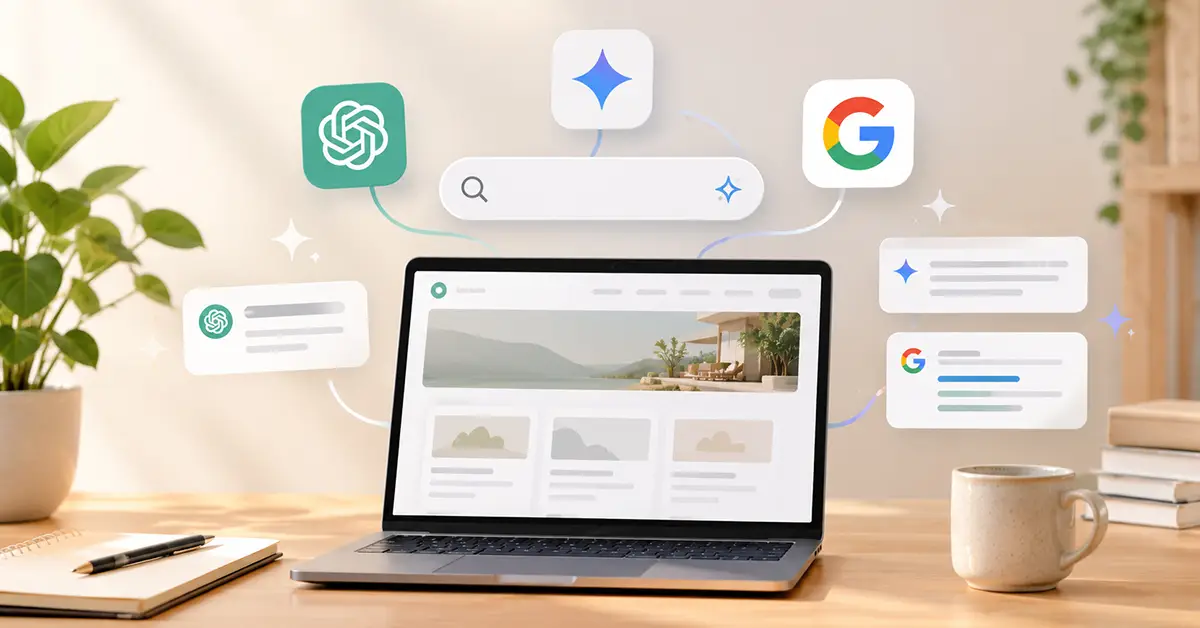
For over twenty years, search engine optimization has been the backbone of online visibility. Businesses learned to chase keywords, earn backlinks, and climb their way up Google’s results pages. But the ground beneath that familiar playbook is shifting. As millions of people swap their search bars for AI assistants like ChatGPT, Perplexity, Gemini, and Google’s AI Overviews, a new discipline has emerged to meet the moment, and it is quickly becoming essential for any business that wants to stay visible.
That discipline is Generative Engine Optimization, or GEO. If you have been hearing the term and wondering what it actually means and why everyone in digital marketing is suddenly talking about it, this guide breaks it down clearly.
Let us start with the basics. The GEO meaning is straightforward once you strip away the jargon: Generative Engine Optimization is the practice of structuring your content and digital presence so that AI-powered platforms can find, understand, cite, and recommend your brand when they answer people’s questions.
Think about how you increasingly look for information. Instead of typing a query and scanning ten blue links, you ask an AI a question and receive one synthesised answer, often with specific brands, products, or sources mentioned. GEO is about making sure your business is one of those mentioned sources. Where traditional SEO aimed to win a high rank on a results page, GEO aims to win a place inside the AI’s actual answer.
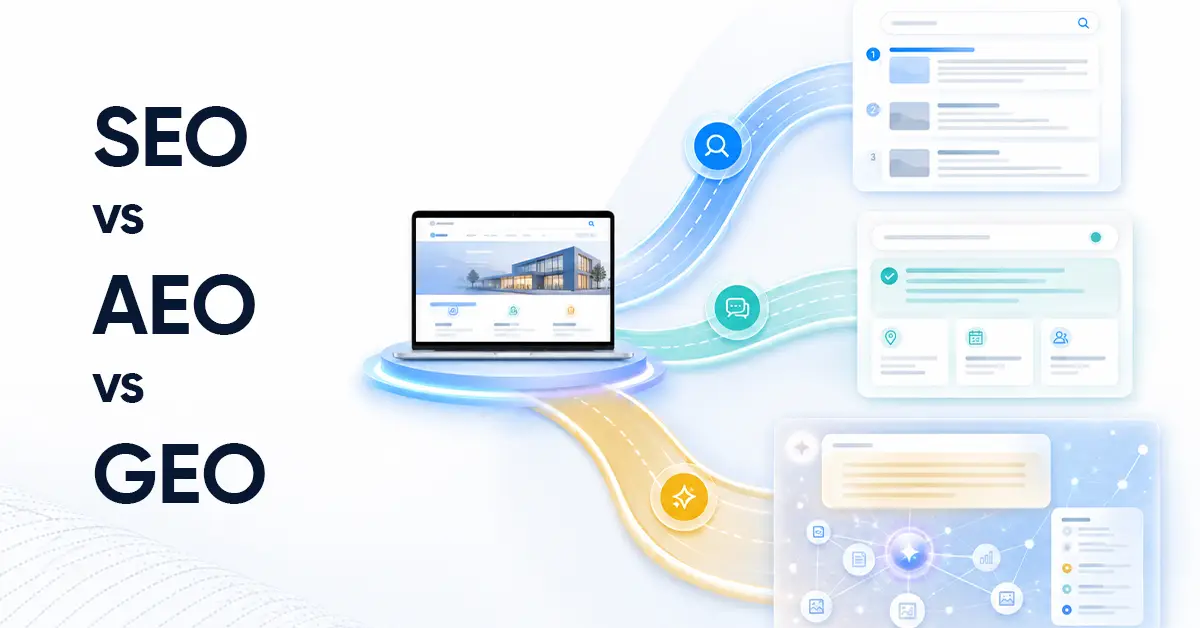
You may also hear it called Answer Engine Optimization (AEO) or Large Language Model Optimization (LLMO). The industry has not settled on one name yet, but they all describe the same goal: getting your content cited and recommended by AI.
This is not a distant trend; it is happening already. The way people discover information is moving from searching to asking, and that changes the rules of visibility entirely.
Consider this: research suggests the overlap between the top links on Google and the sources actually cited by AI engines has dropped from around 70% to below 20%, and that gap keeps widening. In plain terms, ranking number one on Google no longer guarantees that an AI will mention your brand when answering a related question. These systems are developing their own preferences for which sources to trust.
For businesses, the stakes are high. When an AI answers a customer’s question without ever sending them to a website, the brands named in that answer win the attention, the trust, and often the sale. The ones left out simply never enter the conversation. That is why GEO has gone from a nice-to-have to a competitive necessity.
The clearest way to grasp GEO is to compare it with what came before. The GEO vs SEO distinction comes down to a fundamental difference in how each works and what success looks like.
Traditional SEO is built around search engines that crawl and index pages, then rank them so they can send users a list of links to click. Success is measured in rankings, clicks, and traffic to your site. The whole model is about earning a spot among those ten blue links and drawing visitors to your pages.
GEO works differently because AI engines work differently. Rather than simply ranking pages, large language models read, interpret, and predict, extracting facts from many sources and weaving them into a single coherent response. Success here is measured not in clicks but in mentions and citations, how often your brand is referenced and recommended inside AI-generated answers. If SEO was about earning a place among ten links, GEO is about earning a place among the two to seven sources an AI typically cites in one response.
There is another key difference worth understanding. When you ask an AI a complex question, it does not search for your exact phrase. It breaks the question into smaller sub-queries and searches for each separately, a process often called query fan-out. This means your content needs to comprehensively cover a topic from many angles, not just target one keyword.
Importantly, GEO does not replace SEO; it builds on it. Your site still needs to be crawlable, fast, and trustworthy. GEO adds a new layer on top of those solid foundations.
Understanding what drives AI search ranking helps clarify how to succeed at GEO. Unlike traditional crawlers that lean heavily on keywords and backlinks, AI systems prioritise structure, semantic clarity, credibility, and contextual completeness. They are not rewarding you for repeating a phrase; they are rewarding you for being a clear, trustworthy, well-organized source of facts they can confidently extract and cite.
Several factors influence whether an AI references your brand. Content that is well-structured and easy to extract, with clear headings and direct answers, performs better. Authority and trust signals matter enormously, drawing on principles of experience, expertise, authoritativeness, and trustworthiness. A consistent presence across reputable third-party sites and reviews increases recognition. And crucially, AI crawlers must actually be able to access your pages, a surprisingly common technical oversight that quietly blocks many businesses from being cited at all.
Adapting to this new landscape does not mean abandoning everything you have built. It means evolving. Focus on creating genuinely helpful, fact-rich content that answers the real questions your customers ask, and structure it so both humans and machines can navigate it easily. Build authentic authority through original insights and a credible reputation across the web. Make sure your technical setup allows AI engines to read your content. And start thinking about visibility in terms of being recommended, not just ranked.
For most businesses, the smartest path is to combine the durable strengths of traditional SEO with these new GEO practices, since you need to be found in classic search and cited in AI answers alike.
Generative Engine Optimization represents the most significant shift in digital visibility since search engines first appeared. As AI becomes the front door to the internet for more and more people, the brands that thrive will be those that learn to be part of the answer, not just a link on a page.
At Digital Tokri, we help businesses make exactly this transition, blending proven SEO expertise with forward-looking GEO strategies so your brand stays visible no matter how your customers choose to search. The shift is already underway, and the businesses that adapt early will own the conversations their competitors have not even noticed are happening. The time to embrace GEO is now.
© Digital Tokri (Ira Digital Services). All rights reserved.